Food Security: Definition, Pillars, Programs, and Challenges in Indonesia
Share
-

Food security is the condition in which food needs are met at every level, from the nation down to the individual. It is reflected in the availability of food that is sufficient in quantity and quality, safe, diverse, nutritious, evenly distributed, affordable, and consistent with religious and cultural values, so that people can live healthy, active, and productive lives on a sustainable basis. This article examines the definition of food security, its four main pillars, and the challenges Indonesia faces, along with the role of the private sector in maintaining food stability.
Food security is about far more than the volume of rice held in government warehouses. The concept concerns whether every citizen, from those in major cities to those on remote islands, can obtain sufficient, safe, and nutritious food every day, throughout the year, without disruption from climate shocks or price volatility. In Indonesia, the issue is tangible: animal protein consumption remains low, stunting prevalence stands at 19.8 percent (SSGI 2024, Ministry of Health), and import dependency for certain commodities has yet to recover. This article outlines the definition of food security according to the FAO and Indonesian law, the four pillars that support it, current conditions in the country, ongoing government programs, and why the role of the private sector has become increasingly critical.
The issue sits at the center of the national agenda. The government has set its sights on realizing the Golden Indonesia 2045 vision, and a stable food supply is a prerequisite: it is not possible to build a productive generation on a fragile nutritional foundation. The launch of the Free Nutritious Meals program and the Merah Putih Village Cooperatives sends a clear signal that the state regards food access as a priority. Public programs alone, however, are not enough. Most of the food production, distribution, and processing chain lies in the hands of business actors, which means cross-sector collaboration will determine whether these targets are achieved or remain on paper.
The Contribution of Integrated Agribusiness
Integrated agribusiness companies such as JAPFA occupy a distinctive position in this ecosystem because they control the value chain from upstream to downstream, spanning animal feed, breeding, farming, and finished food products. This “feed to food” model is what makes consistent quality control and supply possible, two elements that lie at the heart of food security.
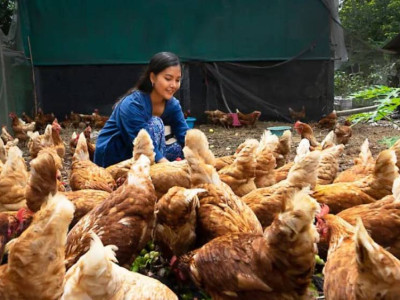
PT Japfa Comfeed Indonesia Tbk offers a concrete illustration. As one of Indonesia’s largest integrated agri-food companies, and the second-largest player in the animal feed segment (approximately 21 to 22 percent market share) behind Charoen Pokphand, Japfa operates a production network that directly supports the availability pillar. In May 2025, the company inaugurated an egg production facility in Bintan. According to the official statement issued at the inauguration of the egg production facility and the Japfa for Kids program in Bintan on 14 May 2025, the 7.6-hectare facility has a capacity of 516,000 laying hens and produces 360,000 eggs per day, with a target of increasing this to 1 million hens and 750,000 eggs per day by 2026. Investments of this kind add to the supply of affordable animal protein in a region that has long depended on shipments from outside.
The contribution to the utilization pillar is visible in community nutrition programs. Through JAPFA for Kids, more than 201,056 students across 1,214 schools in 105 districts and municipalities have received nutrition education and access to affordable protein since 2008 (Japfa Sustainability Report 2025). One derivative initiative, the One Day One Egg program, has produced measurable results: of the 1,034 undernourished children enrolled in the program, 646 children (62.5 percent) moved into the healthy nutritional status category in 2025. These figures illustrate how simple, affordable protein interventions can shift nutritional indicators at the individual level, precisely the pillar that presents the greatest challenge for Indonesia.
What Is Food Security and What Are Its Four Main Pillars?
Food security is the condition in which food needs are met at every level, from the nation down to the individual, reflected in the availability of food that is sufficient in quantity and quality, safe, diverse, nutritious, evenly distributed, affordable, and consistent with religious and cultural values, so that people can live healthy, active, and productive lives on a sustainable basis.
This definition aligns with the FAO framework, which rests on four pillars: availability, access, utilization, and stability. In essence, food security does not stop at how much food is produced; it also depends on whether that food is affordable, nutritionally absorbed by the body, and consistently available over time.
Indonesia’s food security depends heavily on the availability of animal protein. This is not merely a question of how many tons of meat, eggs, fish, and milk are produced, but of the production, distribution, and policy strategies that safeguard public nutrition while reducing national dependence on imports.
The Benefits of Animal Protein and Its Long-Term Impact
Animal proteins such as meat, fish, eggs, and milk carry a biological advantage because they provide a complete profile of essential amino acids, heme iron, and important micronutrients including vitamin B12 and omega-3. These nutrients are crucial in preventing anemia and stunting in children. Unfortunately, public access to animal protein remains closely tied to purchasing power, which is why stunting prevalence is highest among lower-income groups. Failing to meet these nutritional needs translates into reduced cognitive capacity and lower productivity in the national workforce of the future.
Principal Sources of Animal Protein in Indonesia
1. Poultry: the backbone, thanks to a rapid production cycle
Within national supply, poultry and fisheries are the most reliable and affordable sources of protein. The poultry sector has achieved a production surplus owing to its rapid harvest cycle, although it remains vulnerable to price fluctuations in imported feed ingredients. Fisheries, meanwhile, hold enormous potential in both sustainable marine capture and aquaculture. Even so, national fish consumption remains below optimal levels and lags behind neighboring countries, held back by distribution barriers and the limited cold chain infrastructure across many regions.
2. Beef: domestic production versus demand
An animal protein deficit during the first 1,000 days of life correlates strongly with stunting. The 2024 Indonesian Nutritional Status Survey (SSGI) recorded national stunting prevalence falling to 19.8 percent from 21.5 percent in 2023, against an RPJMN target of 14.2 percent by 2029.
Unlike poultry, domestic beef and milk production faces a wide deficit and remains heavily reliant on imports. The root causes are structural: long biological cycles in cattle, the dominance of small-scale smallholder farming, and low livestock productivity per capita. Responding to surging demand and supporting government programs such as Free Nutritious Meals will require strong upstream intervention, from importing breeding cattle to improving facilities and genetics, in order to convert import dependency into long-term supply self-sufficiency.
3. Fisheries and marine products: contribution and aquaculture potential
The advantages of fish as a protein source are clear: high species diversity, year-round availability, generally lower prices than other animal proteins, and a rich content of long-chain omega-3 fatty acids that land-based livestock cannot provide.
Utilization, however, remains suboptimal. National fish consumption in 2024 was recorded at 58.76 kg per capita per year, slightly below the Ministry of Marine Affairs and Fisheries target of 59 kg. On a daily basis, Indonesian fish consumption stands at just 62.3 grams per capita, well behind Vietnam at 94 grams. The principal obstacles are distribution and the cold chain: uneven supply across regions, particularly in underdeveloped, frontier, and outermost (3T) areas, has created stark inequality in access to quality fish.
This is where aquaculture holds the key. Unlike capture fisheries, which are constrained by stock carrying capacity and threatened by overfishing, aquaculture can be scaled up without depleting wild stocks, provided it is supported by superior fry, efficient feed, and adequate cold storage infrastructure.
4. Milk and dairy products: the challenges and opportunities of domestic fresh milk
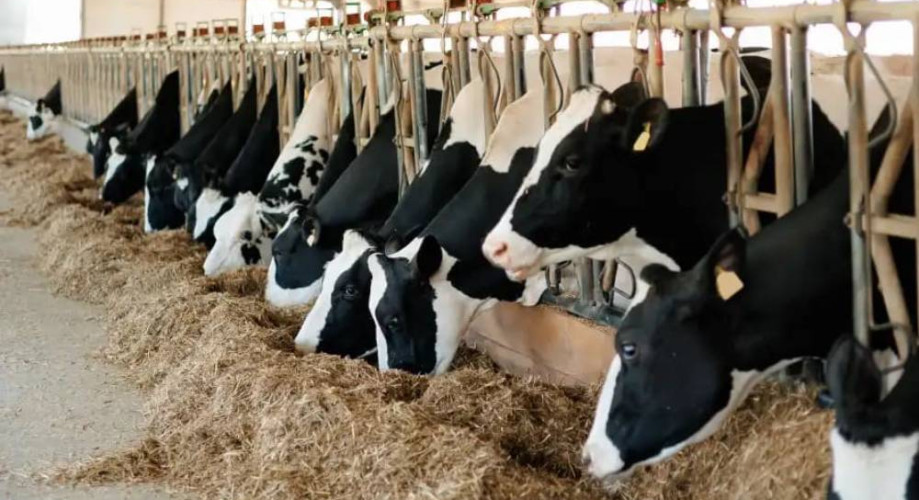
Milk is the commodity with the widest gap between demand and production capacity. On the consumption side, Indonesian milk consumption stands at roughly 16.27 kg per capita per year (BPS, 2020), far behind Vietnam (approximately 20 kg), the Philippines (23 kg), Thailand (44 kg), and Malaysia (50 kg). The FAO consumption standard is 30 kg per capita per year. The government has set a realistic incremental target of raising consumption to 20.1 kg per capita per year.
On the production side, Domestic Fresh Milk (SSDN) currently supplies only around 20 percent of the total raw material requirements of the dairy processing industry, with the remainder imported. The Indonesian Dairy Blueprint 2013–2025 had in fact targeted domestic fresh milk to meet 60 percent of national demand by 2025.
The Ministry of Agriculture estimates that national fresh milk demand will reach 8.5 million tons by 2029, comprising 4.9 million tons for regular consumption and 3.6 million tons for the Free Nutritious Meals program. This represents a guaranteed market that, if met with upstream investment in imported dairy breeding stock, genetic improvement, the adoption of good farming practices, and stronger dairy cooperatives, could transform import dependency into self-sufficiency.
Food Security in Indonesia
How does Indonesia stand when measured objectively? One international benchmark is the Global Food Security Index (GFSI) compiled by Economist Impact. In the 2022 GFSI, Indonesia ranked 63rd out of 113 countries with a score of 60.2 points, placing it in the “moderate” category and up from 59.2 the previous year. The score indicates progress, but a gap remains relative to other upper-middle-income countries in the region.
An indicator closer to everyday life is stunting prevalence. The 2024 Indonesian Nutritional Status Survey (SSGI), released by the Ministry of Health in May 2025, recorded a national stunting rate of 19.8 percent, down from 21.5 percent in 2023. This means approximately 4.4 million children under five are still affected by stunting.
The downward trend is welcome, but the pace is not yet fast enough: the government is targeting 14.2 percent by 2029 and 5 percent by 2045. Reaching these figures will require accelerating the decline, and affordable animal protein intake is one of the key levers.
Government Programs for Food Security
The availability of animal protein has never rested on farmers alone; it is driven by public policy and multi-stakeholder cooperation. It is shaped by feed prices, access to capital, import regulations, animal health status, and how quickly research findings reach the farm. The following four policy areas will determine whether animal protein self-sufficiency targets advance or stall on paper.
1. Feed Subsidy and Financing Policy (KUR)
Farmers’ feed costs are highly exposed to global volatility because of the heavy reliance on imported raw materials. The government has responded by encouraging the absorption of local corn and supporting research into alternative feeds such as black soldier fly larvae. On the financing side, the government relies on the People’s Business Credit (KUR) scheme, offering low interest rates of no more than 5 percent and waiving additional collateral for loans of up to IDR 100 million. The scheme has nonetheless drawn criticism for applying the same terms as the trade sector, leaving administrative requirements that remain difficult for small-scale farmers without land assets to satisfy.
2. Trade Regulation, Biosecurity, and Quality Standards
- Trade: Slow import quota bureaucracy frequently triggers shortages and spikes in meat prices. Permit procedures need to be simplified while continuing to protect local farmers.
- Biosecurity: The foot-and-mouth disease outbreak exposed the sector’s vulnerability. Effective control requires routine vaccination and cross-sector collaboration to overcome resistance among farmers in the field.
- Quality standards: Veterinary Control Number (NKV) certification, halal certification, and cold chain compliance are not mere formalities. All three are prerequisites for local products to be absorbed by modern retail, the Free Nutritious Meals (MBG) program, and export markets.
3. Public–Private Partnership (Nucleus–Plasma)
Constraints on the state budget have led the government to encourage large-scale private investment, such as the integrated livestock zones in Sukamara and Brebes. These investments have become increasingly attractive because of the off-take guarantee provided by the MBG program. Promising as it is, the nucleus–plasma partnership scheme must be closely supervised through regulation to ensure that smallholder farmers are not disadvantaged by unbalanced contracts or risk-sharing arrangements.
4. Support for Research and Technology Transfer
Low productivity, such as the milk yield of smallholder dairy cattle, is not merely a genetic problem but a matter of limited technology adoption. Institutions such as BRIN focus on improvements in genetics, reproduction, and feed. Clear evidence of the effectiveness of this work comes from the U.S.–Indonesia Dairy Partnership (2024–2025), in which improved management practices successfully raised daily milk production by up to 32.5 percent. The principal challenge now is downstream application: ensuring that research travels from the laboratory to the farm through sound extension and funding systems.
These four pillars are interlocking. KUR financing is meaningless if livestock are wiped out by disease; private investment will not materialize without regulatory certainty; and research has no impact if farmers lack the capital to adopt it. Animal protein security depends entirely on policy coordination.
Food Security Challenges in Indonesia: The Animal Protein Sector
National animal protein production rests on a fragile foundation shaped by four interlocking problems:
- Dependence on imported feed: Feed accounts for 60 to 70 percent of production costs. Although corn is in surplus, soybean meal (SBM), which makes up 25 percent of poultry feed, is almost entirely imported at roughly 5.5 million tons per year. As a result, production costs are highly exposed to global weather patterns such as El Niño and to changes in import regulations.
- Disease and zoonotic threats: Outbreaks such as foot-and-mouth disease in 2022 caused long-term damage to the productivity of millions of animals. There are also cross-species disease threats, including avian influenza and anthrax, along with the risk of antimicrobial resistance (AMR) arising from uncontrolled antibiotic use by farmers.
- Cold chain infrastructure deficit: Cold storage facilities are severely limited and concentrated in Java and major cities. This drives high product spoilage rates of up to 20 percent and nutritional inequality, leaving 3T regions with poor access to quality fresh meat, milk, and fish.
- Environmental burden: Expanding production has created new problems: overfishing at sea, with 30 percent of fishing grounds in decline; pollution from farm waste; high greenhouse gas emissions; and substantial food waste, which accounts for 40.91 percent of national waste.
Five Strategies for Increasing Production
Addressing these challenges requires simultaneous intervention from upstream to downstream:
- Genetic improvement and feed management: Applying reproductive technologies such as artificial insemination and embryo transfer from research institutions including BRIN, combined with feed management training that has been shown to raise daily milk production by up to 32.5 percent without replacing livestock.
- Integrated zones and strengthening smallholder farmers: Organizing small-scale farmers, typically holding three to five head of livestock, into corporations or cooperatives. Integrated zone models operating on a nucleus–plasma basis ensure that smallholder farmers gain access to financing, technology, and market certainty without losing their bargaining position.
- Diversification into local alternative feeds: Reducing soybean meal imports by scaling up proven local feeds such as palm kernel meal (PKM), black soldier fly larvae, and fermented agricultural waste, which have been shown to reduce feed costs by up to 30 percent.
- Optimizing extension services and animal health: Addressing vaccination refusal in the field through communication and education, expanding the reach of animal health centers, adding veterinary personnel, and tightening oversight of antibiotic use.
- Investment in cold chain and processing: Building cold storage, refrigerated containers, and processing facilities through public–private partnership (KPBU) schemes. This is critical to reducing food loss, extending shelf life, and reaching consumers in 3T regions.
Why Is the Role of the Private Sector Critical?
The state sets direction and provides a safety net, but most of the food people consume is produced, processed, and distributed by business actors. This is why the private sector’s role is critical: not to replace government, but to complement capacity that the public budget cannot carry alone.
Consider the government’s nutritious meals program. Now reaching more than 60 million beneficiaries, it has created a surge in protein demand on a scale that can only be met by an integrated and reliable supply chain. The eggs, chicken, and fish entering the program’s menus must be produced consistently, safely, and at affordable prices, which is a demanding logistical and production task. Structural demand of this kind underscores a single point: without close partnership with the food industry, national nutrition targets will be difficult to achieve on schedule.
The private sector also brings three contributions that are difficult to replace: large-scale production capacity supporting the availability pillar; distribution networks that extend access to remote regions; and research and technical training that raise the productivity of smallholder farmers. When this capacity is combined with government policy, the impact multiplies, as reflected in Japfa’s support for national food security and sustainable economic growth.
Frequently Asked Questions
Food security training programs for local livestock and aquaculture farmers
For livestock farmers, Japfa runs structured training through a nucleus–plasma partnership scheme covering more than 8,700 partner farmers (Sustainability Report 2025). Japfa supplies day-old chicks, feed, medicines, and technical guidance, while farmers receive hands-on learning with evaluations at the end of each harvest, comparative study visits between farms, and support from Field Extension Officers (PPL) at least twice per production cycle. Supporting measures include digitalization through the CCF Recording application, an increase in training hours of more than 90 percent in 2025, bank recommendation letters to facilitate access to capital, and teaching farm facilities established with Universitas Gadjah Mada (UGM), Universitas Brawijaya (UB), Universitas Syiah Kuala (Unsyiah), IPB University, and Universitas Hasanuddin (UNHAS) for knowledge transfer.
For aquaculture farmers, Japfa’s aquaculture unit (PT Suri Tani Pemuka, or STP) runs the KAVAS (Vannamei Zone) program for small-scale shrimp farmers, reaching more than 100 participants: farmers provide the ponds and labor, while STP supplies fry, feed, and technical guidance. Other training initiatives include STP Mania Loyalty (“Fish Health and Feeding Strategy in Aquafarming”), the development of ATD field technology (aerators, GIS mapping, UV disinfection), biofloc training in Purwakarta and Lampung, the SAIL program that has involved more than 400 students since 2020, and STP Mengajar in collaboration with IPB Vocational School.
Strategies for reducing dependence on imported animal protein
Japfa’s principal strategy is vertical integration from “feed to food,” producing protein domestically at every stage, from feed and breeding (day-old chicks) through farming to processing, so that protein needs are met by domestic production rather than imported finished products. Domestic capacity continues to expand through 15 feed mills, 79 breeding farms, 30 hatcheries, and new facilities such as the egg production operation in Bintan (516,000 laying hens producing 360,000 eggs per day, rising toward 1 million hens by 2026). For superior breeding stock, Japfa breeds the Indian River strain (Aviagen) locally and adapts it to Indonesian climate conditions, thereby reducing reliance on imported stock.
Upstream, Japfa continues to raise the local content of its raw materials: in 2025, 65 percent of poultry feed ingredients and 43 percent of fish and shrimp feed ingredients were sourced from local suppliers, and corn has been supplied domestically since 2017 in line with government policy. Self-sufficiency is further reinforced through PT Vaksindo, the only Indonesian private company registered to produce foot-and-mouth disease and lumpy skin disease vaccines, and through the development of domestic shrimp broodstock (a broodstock multiplication center established with Hendrix Genetics/Kona Bay) that has produced Super PL fry. For the record, Japfa is Indonesia’s second-largest integrated player in feed and day-old chicks, not the largest.
The company’s contribution to local food self-sufficiency
As one of Indonesia’s largest integrated agri-food companies, ranking second in the feed and breeding segments, Japfa contributes to food self-sufficiency by supplying affordable animal protein at scale from domestic production, distributed across the archipelago through traditional markets, modern retail, and online platforms. With revenue of IDR 60.7 trillion in 2025 and a fully integrated approach to livestock industrialization, ensuring traceability through NKV, ISO 22000, and HACCP certification, Japfa serves protein demand from a population of more than 278 million whose poultry consumption stands at only about 8.6 kg per capita, leaving considerable room for growth.
This contribution is extended through inclusive growth and a collaborative ecosystem. More than 8,700 partner farmers, together with the KAVAS program for aquaculture farmers, distribute production capacity into local communities with guaranteed markets and inputs, while new facilities such as the one in Bintan strengthen regional protein supply. On nutritional access, the JAPFA for Kids program (reaching 201,056 children since 2008), One Day One Egg, and Gemar Makan Ikan improve protein access while helping to reduce stunting. Japfa defines food security as “building a resilient national ecosystem” and partners with Bappenas, the National Nutrition Agency, and the Center for Health and Nutrition Studies at Universitas Indonesia in support of the Free Nutritious Meals program and the Golden Indonesia 2045 vision. As a private entity, its position is that of a complementary partner in the national food self-sufficiency agenda, not a substitute for it.