
JAPFA Holds AKJJ for the Third Time, Highlighting 18 Years of JAPFA for Kids for the Nation’s Future Generation
Share
-

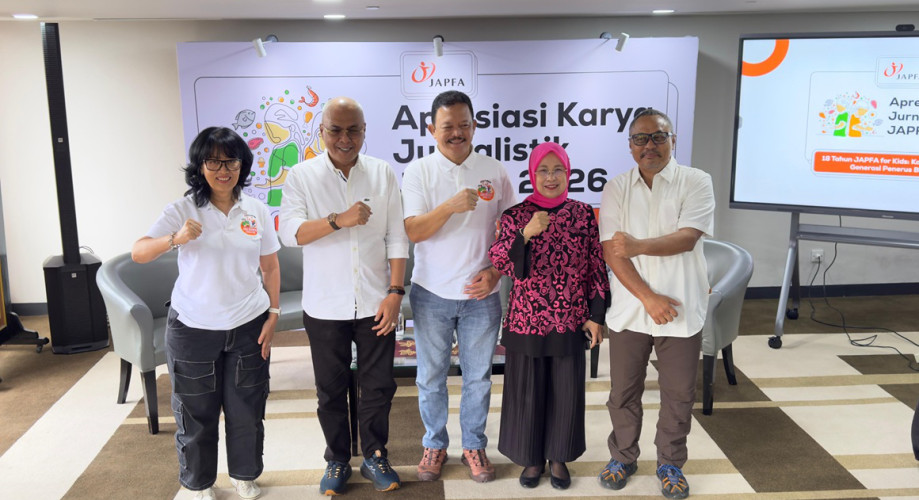
Jakarta, May 12, 2026 - PT Japfa Comfeed Indonesia Tbk (JAPFA) has once again reaffirmed its commitment to supporting the growth and development of Indonesia’s younger generation through its corporate social responsibility program, JAPFA for Kids. This commitment was conveyed during a Media Gathering event, which also marked the opening of the Apresiasi Karya Jurnalistik JAPFA (AKJJ) 2026, held in Jakarta.
Now held for the third time, AKJJ 2026 carries the theme “18 Years of JAPFA for Kids: Collaboration for the Nation’s Future Generation – From Data and Facts to Field Stories.” The theme reflects the 18-year journey of JAPFA for Kids in supporting improvements in the nutritional quality and health of Indonesian children, while also encouraging cross-sector collaboration to strengthen public education on the importance of adequate child nutrition.
Rachmat Indrajaya, Direktur Corporate Affairs JAPFA, stated, “For 18 years, JAPFA for Kids has represented the company’s sustained commitment to improving the nutritional quality and health of Indonesian children. We believe that building Indonesia’s future begins with ensuring that children receive adequate nutrition and grow up in environments that support healthy lifestyles. Through the third implementation of AKJJ, we also aim to strengthen collaboration with the media in raising public awareness about the importance of preparing the nation’s future generation.”
Challenges related to child nutrition in Indonesia remain a shared concern. Based on the 2023 Indonesia Health Survey, 11% of children aged 5–12 are still classified as undernourished and malnourished based on the Body Mass Index-for-Age (BMI-for-age) indicator. Meanwhile, data compiled by JAPFA from nine JAPFA for Kids implementation areas in 2025 shows that 1,034 out of a total of 15,498 students (approximately 6.6%) were recorded as having undernourished and malnourished status. These conditions indicate that malnutrition remains a real challenge that requires a collaborative and sustainable approach.
In 2024, JAPFA for Kids reached seven regencies/cities. Out of 15,518 students, 1,479 were identified as undernourished and became the primary focus of the program. Following its implementation, JAPFA for Kids successfully improved the nutritional status of 762 children, equivalent to 51.5% of those identified. Meanwhile, in 2025, JAPFA for Kids was implemented across nine regencies/cities, covering 123 schools. Based on the collected data, 1,034 students were identified as experiencing malnutrition and became the main targets of program interventions. After the program’s implementation, 646 students showed an improvement in their nutritional status, achieving normal nutrition levels, or 62.5%.
“In its implementation, JAPFA for Kids adopts various integrated strategies, ranging from the provision of daily animal protein intake in the form of eggs for six months for students experiencing malnutrition, to the routine monitoring of students’ weight and height through digital applications, as well as promoting healthy lifestyle habits through the JAPFA Healthy Day program. The program is also complemented by health education, teacher training, parental engagement, and regular monitoring to ensure that its impact can be measured consistently,” said Retno Artsanti, Head of Social Investment JAPFA.
As part of AKJJ 2026, JAPFA has also appointed a panel of judges from diverse professional backgrounds to ensure that the submitted journalistic works are not only informative but also capable of delivering a positive impact on society.
Akhmad Munir, a senior journalist and Chairman of the Indonesian Journalists Association, emphasized that the media plays a crucial role in raising public awareness on child nutrition issues through data-driven and socially impactful journalistic works. “Child nutrition is not merely a health issue—it is also about the future of the nation. Therefore, strong journalistic work must be able to present accurate data, balanced perspectives, and on-the-ground stories that resonate with the public, so that the message delivered can drive meaningful change,” he said.
Meanwhile, senior photojournalist Beawiharta emphasized the importance of visual storytelling in conveying on-the-ground realities. According to him, photojournalism has the power to build public empathy toward social issues, including child nutrition challenges in Indonesia. “Strong visuals can bring stories to life and create a deeper emotional connection. Through photojournalism, the public can directly witness realities in the field, allowing child nutrition issues to be understood not only as numbers and data, but also as a humanitarian concern that requires collective attention,” said Beawiharta.
Meanwhile, public health nutrition expert from the Faculty of Public Health, Universitas Indonesia, Prof. Dr. drg. Sandra Fikawati, M.P.H emphasized that public education on balanced nutrition still needs to be continuously strengthened through cross-sector collaboration, including with the media. “Improving the nutritional quality of children requires the involvement of multiple stakeholders. The media plays a strategic role in delivering accurate and easily understood information to the public, particularly regarding the importance of animal protein consumption, balanced diets, and the adoption of healthy lifestyle habits from an early age,” said Prof. Sandra Fikawati.
Through the organization of AKJJ 2026, JAPFA hopes to encourage the creation of more journalistic works that can broaden public understanding while also driving behavioral change toward healthier lifestyles. AKJJ is also expected to serve as a collaborative platform that brings together data, facts, and field stories to strengthen public education on the importance of balanced nutrition for Indonesian children.
“Cross-sector collaboration is a key element in driving sustainable change. We hope that synergy among the business sector, media, healthcare professionals, schools, and the wider community can continue to be strengthened to support the growth and development of the nation’s future generations,” Rachmat concluded.