
From East Java to Indonesia, JAPFA Highlights 18 Years of JAPFA for Kids through AKJJ 2026
Share
-

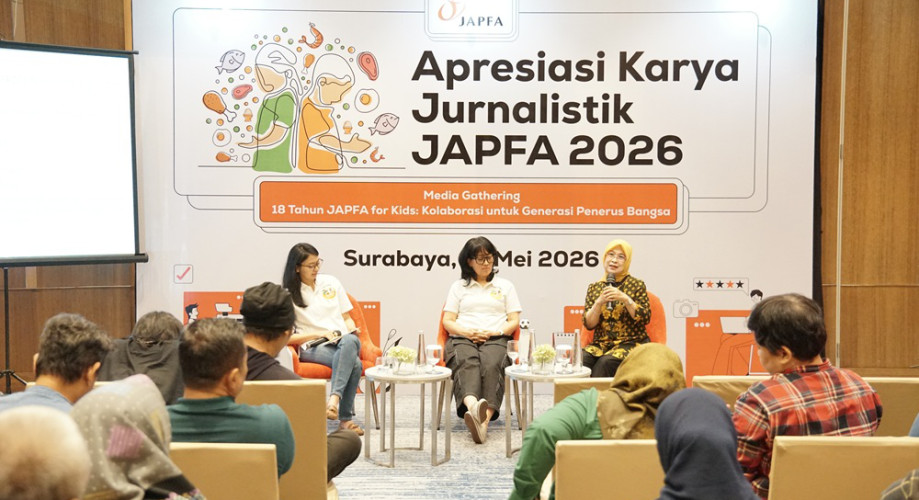
Surabaya, May 19, 2026 – PT Japfa Comfeed Indonesia Tbk (JAPFA) once again held the Apresiasi Karya Jurnalistik JAPFA (AKJJ) 2026 as part of its ongoing efforts to strengthen public education on the importance of child nutrition. This year, the event highlights the 18-year journey of JAPFA for Kids, including the program’s implementation in Paciran Subdistrict, Lamongan Regency, East Java, which has engaged more than 1,100 students and 150 teachers from eight schools.
Now held for the third time, AKJJ 2026 carries the theme “18 Years of JAPFA for Kids: Collaboration for the Nation’s Future Generation – From Data and Facts to Field Stories.” This theme reflects JAPFA for Kids’ 18-year journey in supporting improvements in the nutritional quality and health of Indonesian children, while also promoting cross-sector collaboration to strengthen public awareness of the importance of adequate child nutrition.
Rachmat Indrajaya, Director of Corporate Affairs at JAPFA, stated, “For 18 years, JAPFA for Kids has represented the company’s sustained commitment to improving the nutritional quality and health of Indonesian children. We believe that building Indonesia’s future begins with ensuring that children receive proper nutrition and grow up in environments that foster healthy lifestyles. Through the third implementation of AKJJ, we also aim to strengthen collaboration with the media in raising public awareness about the importance of preparing the nation’s future generations.”
Challenges related to child nutrition in Indonesia remain a shared concern. Based on the 2023 Indonesia Health Survey, 11% of children aged 5–12 are still classified as undernourished or malnourished based on the Body Mass Index-for-Age (BMI-for-age) indicator. Meanwhile, JAPFA’s data collected from seven JAPFA for Kids implementation areas in 2024 shows that approximately 10.1% of students still experienced undernutrition and malnutrition. These findings indicate that malnutrition remains a real challenge that requires collaborative and sustained efforts.
As of 2025, JAPFA for Kids has reached 201,056 students, 13,541 teachers, and 1,214 schools across 105 regencies/cities and 28 provinces in Indonesia. The program has also demonstrated tangible impacts on improving students’ nutritional status. In 2024, 762 out of 1,479 students categorized as undernourished or malnourished improved to normal nutritional status, equivalent to 51.5%. In 2025, 646 out of 1,034 students experienced similar improvement, reaching 62.5%.
“In its implementation, JAPFA for Kids applies various integrated strategies, including providing daily animal protein intake in the form of eggs for six months to students with malnutrition, routine monitoring of students’ weight and height through digital applications, and promoting healthy lifestyle habits through the JAPFA Healthy Day program. The program is also complemented by health education, teacher training, parental engagement, and regular monitoring to ensure that its impact can be consistently measured,” said Retno Artsanti, Head of Social Investment at JAPFA.
As part of AKJJ 2026, JAPFA has also appointed a panel of judges from diverse professional backgrounds to ensure high-quality journalistic works that are not only informative but also impactful for society. The judging panel includes senior journalist and Chairman of the Indonesian Journalists Association (PWI), Akhmad Munir; senior photojournalist Beawiharta; and public health nutrition expert from the Faculty of Public Health, University of Indonesia, Prof. Dr. drg. Sandra Fikawati, M.P.H.
Prof. Sandra Fikawati emphasized that public education on balanced nutrition still needs to be strengthened through cross-sector collaboration, including with the media. “Improving children’s nutritional quality requires the involvement of multiple stakeholders. The media plays a strategic role in delivering accurate and accessible education to the public, particularly regarding the importance of animal protein consumption, balanced diets, and the adoption of healthy lifestyles from an early age,” she said.
Through AKJJ 2026, JAPFA hopes to encourage more journalistic works that can broaden public understanding and drive behavioral changes toward healthier living. The program is also expected to serve as a collaborative platform that brings together data, facts, and field stories to strengthen public education on the importance of balanced nutrition for Indonesian children.
“Cross-sector collaboration is a key element in creating sustainable change. We hope that synergy among businesses, media, healthcare professionals, schools, and the community can continue to be strengthened to support the growth and development of the nation’s future generations,” Rachmat concluded.